
International Museum Day 2020 Special Online Exhibition

“Boundless Compassion: The Origin of Po Leung Kuk Rehabilitation Service” Historic Photo Exhibition


Foreword

“Diversity and Inclusion” is the theme of International Museum Day 2020, which also coincides perfectly with the objective of Po Leung Kuk’s rehabilitation services. Since the 1970s, the Kuk has been dedicated to providing the best care and training for the disabled community, assisting them to cultivate and develop their full potential, so as to create a diverse and inclusive society for all.


To echo with the theme of “Diversity and Inclusion”, this online thematic exhibition focuses on the Kuk’s rehabilitation service; featuring historic photos from the 1970s and 1980s, the exhibition traces the origin and important milestones, and brings visitor on a retrospective view at the path of the history of this meaningful service.


The Origin of Rehabilitation Services: The “Retarded Children Section”

The Chinese name of “Po Leung” connotes “protection of women and children”, it is clear that children is an important stakeholder from the beginning of the Kuk’s establishment. The work of the Kuk began with children, likewise the rehabilitation services sprang from the “Retarded Children Section” in the West Wing Building on Leighton Road.


The earliest record of the Kuk’s services for the mentally handicapped children can be traced back to the 1960s. They were accommodated at the Domestic Science Annexe for centralised care. Although these children could not live with their parents, with the greatest attention and care demonstrated by staffs, the Kuk was a second home for them to grow and blossom.


Professional personnel training is one of the important element in the rehabilitation services. In 1964, the Kuk erected an additional storey on the Vocational Training Building, of which a classroom was dedicated to the training of this particular professionals. The additions was completed in 1965, and its opening ceremony was attended by Ms. J. E. Rowe, officer in charge of special education of the Education Bureau.
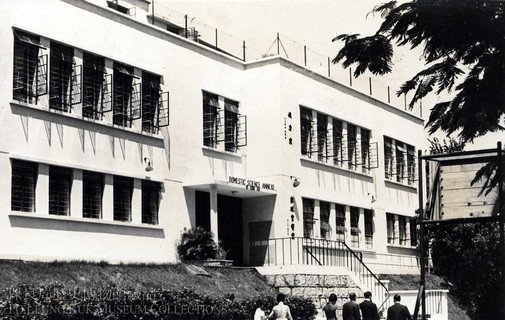
 

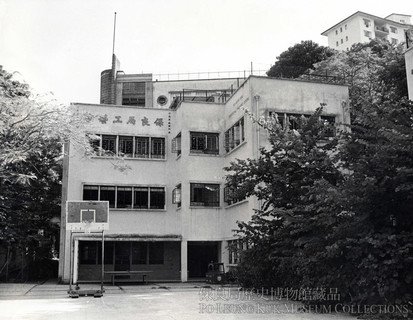
Built during the 1950s, the Domestic Science Annexe inside the Kuk’s Headquarters was home to children with special needs in the early days.
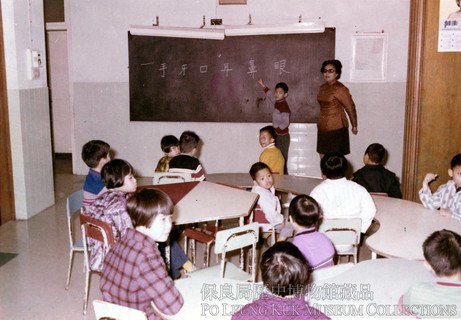
Class at the “Retarded Children Section”. Students with special needs are learning simple Chinese vocabularies.
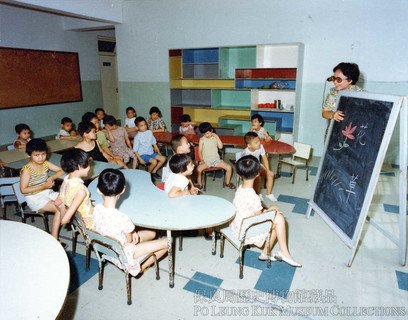
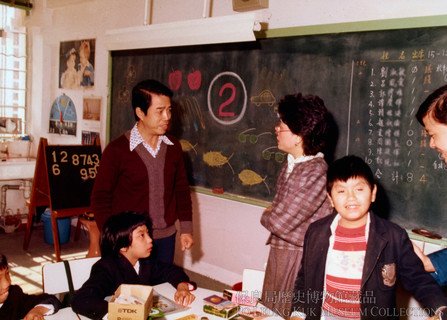
Class at the “Retarded Children Section”. A teacher is using visual aids to stimulate interest in learning.
Vocational Training Building located inside Po Leung Kuk Causeway Bay Headquarters, one of the classrooms on the top floor was used for training professionals who take care of children with special needs.
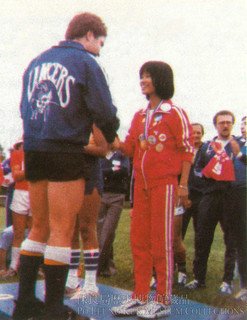
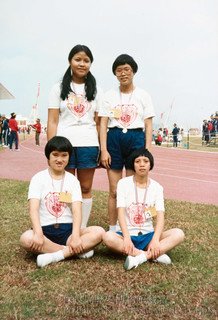
Miss Chan Oi Nor, a girl at the “Retarded Children Section”, won a gold medal at the Special Olympics held in New York, U.S.A. in 1979.
Sheltered workshop is another rehabilitation facility at that time, providing practical work training opportunity to age appropriate residents.
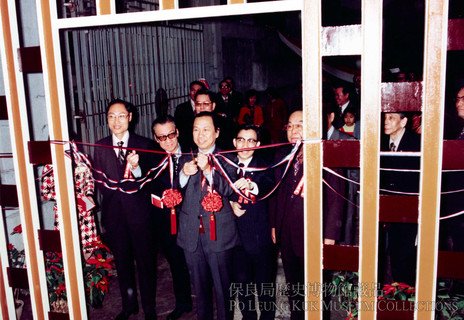
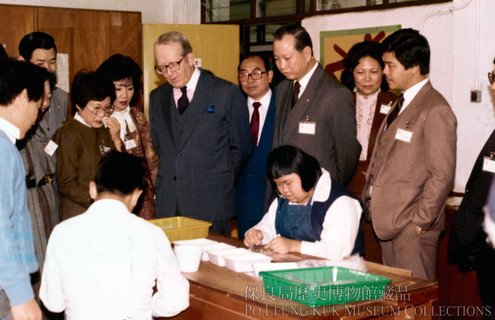
Opened in 1975, the Lion Club of Tai Ping Shan Sheltered Workshop was officiated by Mr Thomas C. Y. Lee (third from left), Director of Social Welfare Department, accompanied by Po Leung Kuk Chairman (1974-75) Mr Gallant Ho Yiu Tai (forth from left) and guests.
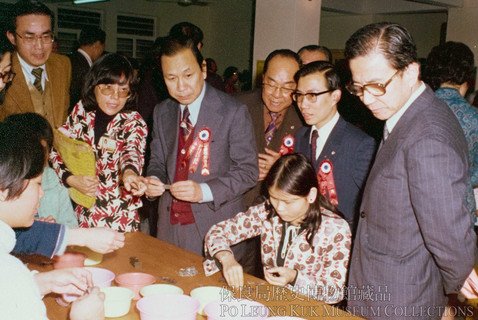
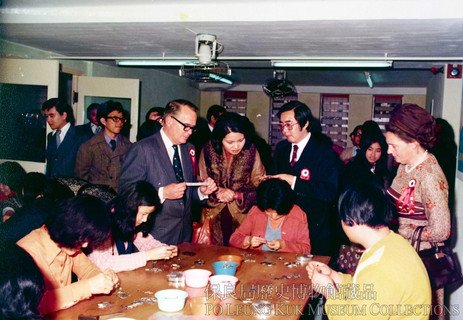
Mr Thomas C. Y. Lee (third from left), Director of Social Welfare Department, visited the Lion Club of Tai Ping Shan Sheltered Workshop with Po Leung Kuk Chairman (1974-75) Mr Gallant Ho Yiu Tai (second from right).
In 1976, Po Leung Kuk opened its first external sheltered workshop and residential unit outside the Headquarters, in Kowloon Ko Chiu Road. Mr D.C. Bray (first from left), Secretary for Home Affairs and Mrs Bray (first from right) visited as officiating guests in March 1976.


Milestone in the 1970s: Kwai Shing Children’s Training Centre

In the 1970s, demands for children rehabilitation services soared; however, only Siu Lam Hospital, Pine Hill Severe Grade Unit and Home of Living Faithfulness were providing limited services at that time. Facing strong demand for the services, the Government announced a plan to build more multiple residential and day care centres in May 1977; In July the same year, the Social Welfare Department announced a sponsorship for 3 welfare organisations, of which the Kuk was one of them, to open new centres to take care of the mentally handicapped children. These development in 1977 are important milestones in the history of rehabilitation services in Hong Kong, after the opening of Siu Lam Hospital by Medical and Health Department in 1972.
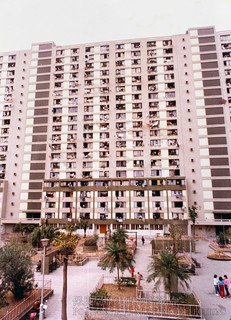
 

An old image of Kwai Shing East Estate. Po Leung Kuk Kwai Shing Children’s Training Centre was located at the ground floor of Block 13 and 14, occupying a total area of 10899 square meters.
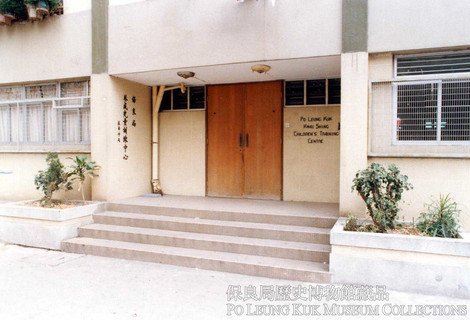
The façade of Po Leung Kuk Kwai Shing Children’s Training Centre.
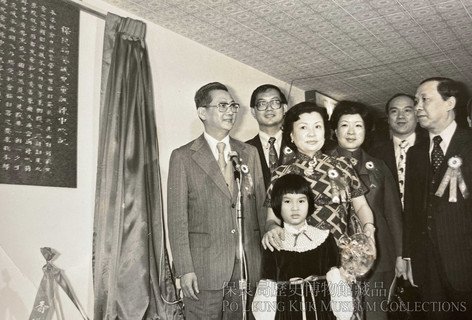
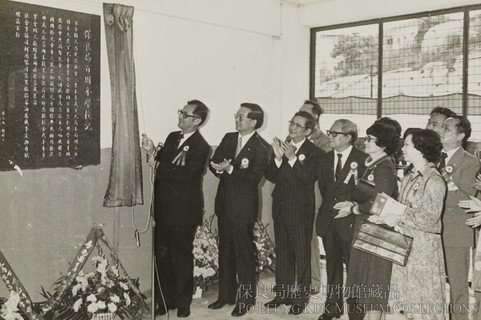
The opening of Kwai Shing Children’s Training Centre in 1978 invited Director of Social Welfare Department Mr Thomas C. Y. Lee (first from right) as its officiating guest. The plaque unveiling ceremony was joined by Po Leung Kuk Chairman (1977-78) Mr Cheng Eng Kuan (first from left) and guests.
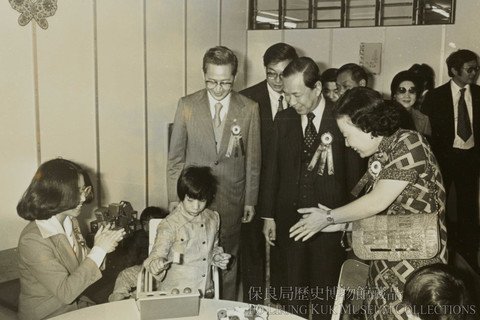
On the day of opening, Po Leung Kuk Chairman (1977-78) Mr Cheng Eng Kuan (third from right) and Director of Social Welfare Department Mr Thomas C.Y. Lee (second from left) visited the children living the Centre.
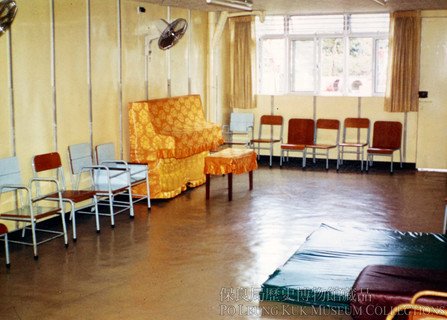
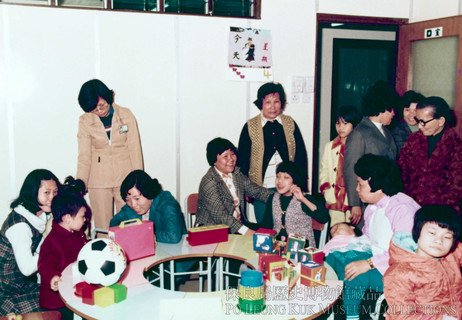
Kwai Shing Children’s Training Centre boasted 5 living rooms, 10 classrooms and activity rooms, in addition to a medical room; there were also outdoor playground and leisure facilities around the Centre. The photo shows one of the activity rooms.
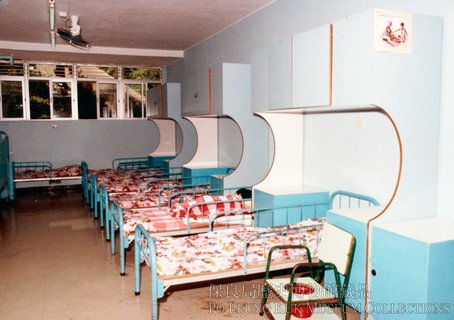
The Centre provided residential care for 50 girls at that time, in addition to shelter and training services. Lived and trained in small groups, the Centre provided a family-like environment to each resident.
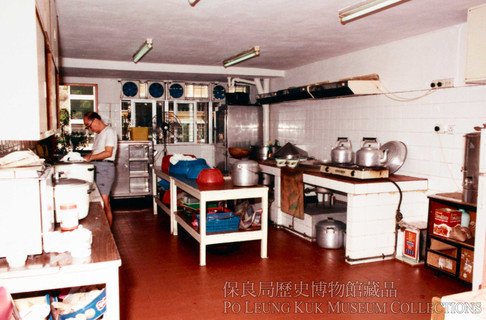
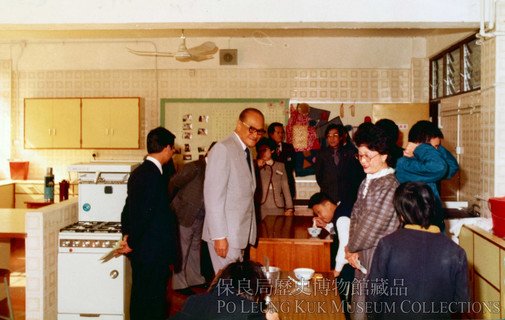
As 24-hour residential unit, the kitchen at the Centre catered the everyday diets of its residents.
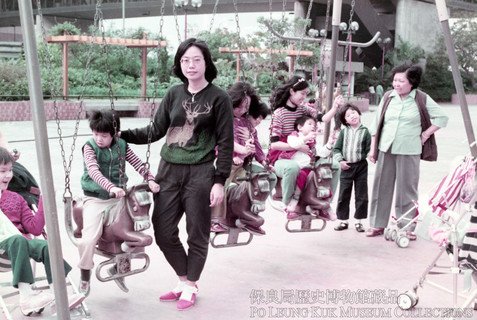
Kwai Shing Children’s Training Centre advocated the use of outdoor activities to develop children’s potentials, hence outdoor playground and leisure facilities were built around the facility.
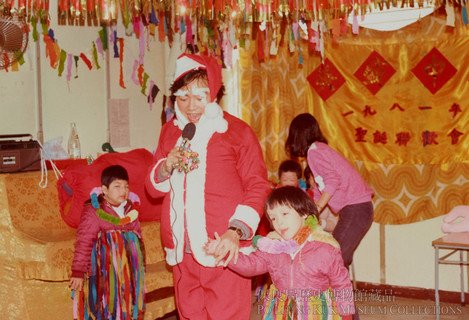
The Centre organised various activities to enhance individual development, including talent show, sport day, competitions and Christmas celebration, etc.
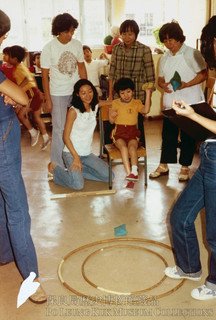
Diversified game activities were available at the Centre to aid the physical development of children in care.
Graduation ceremony of class 1981-82 at the Centre.
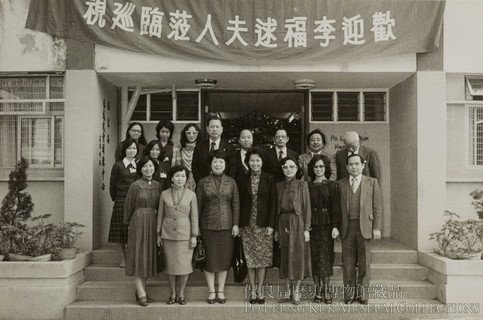
Mrs F. K. Li (centre, front row) inspecting Kwai Shing Children’s Training Centre. Mrs Li, Po Leung Kuk Chairman (1979-80) Mrs Kitty Siu Hon-sum (third from left, front row) and directors took photos in front of Centre.
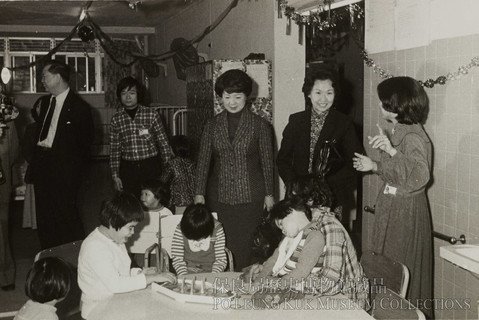
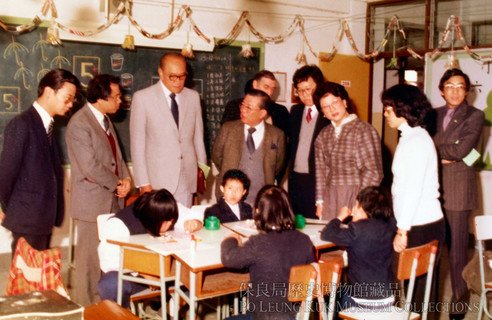
During the visit, Mrs F. K. Li (second from right) and Po Leung Kuk Chairman Kitty Siu Hon Sum (third from right) learnt the teaching condition at Kwai Shing Children’s Training Centre.
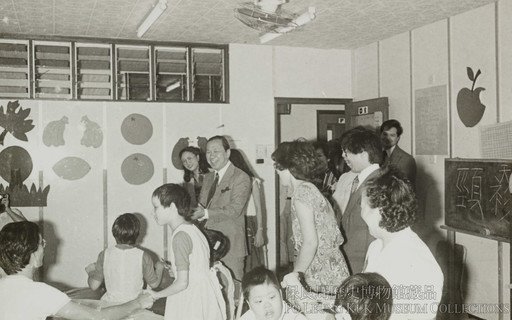
Mr. Thomas C. Y. Lee, Director of Social Welfare Department, visited the Centre’s Open Day in 1979, and praised highly of the Centre’s operation.
Open Day of Kwai Shing Children’s Training Centre in 1978.


Special Education: Po Leung Kuk Centenary School 

In 1977, the Government published a white paper on rehabilitation works, of which that education of the intellectually disabled children under 16 years old was handed over to the Education Bureau from the Social Welfare Department. In response to the new direction, the Kuk’s children rehabilitation service was handed over to the Education Affairs Department. In the same year, the Kuk applied to the Education Bureau for running a new special school, and was granted the lower floors of a school building in Choi Wan Estate in Kowloon. The set up cost was funded by the Board of Directors of 1977-78.


In September 1978, the Po Leung Kuk Centenary School was established. It was the first special school opened for the moderately mentally handicapped children for both the Kuk and the Education Bureau. Catering for children from age 6 to 16, the school provides diversified education services.
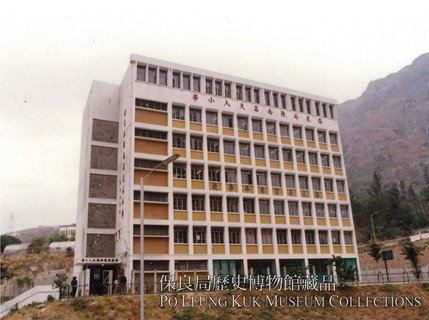
 

In the initial establishment, Po Leung Kuk Centenary School and Po Leung Kuk Mrs. Chan Nam Chong Memorial Primary School shared the same school building, hence two school names were displayed on the façade.
The opening and plaque unveiling ceremony of Po Leung Kuk Centenary School in 1978 invited Secretary for Social Services, Mr E.P. Ho (first from left) as its officiating guest.
The School offered 7 primary classes and 3 junior secondary classes initially, hence there were 10 classrooms in total. Each class would only cater 10 students and the syllabuses were programmed in line with Special Education Section of the Education Bureau. The photo shows one of the classroom.
There were 2 special classrooms at the School. This photo shows the domestic science classroom.
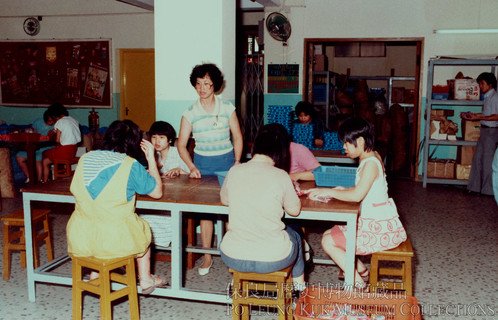
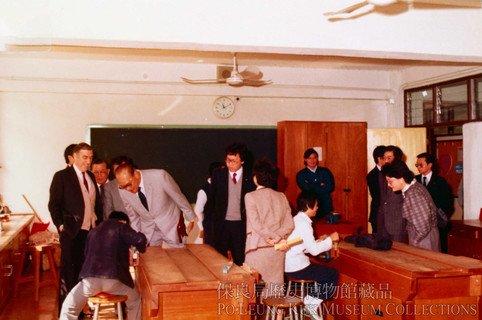
There were 2 special classrooms at the School. This photo shows the handicraft classroom.
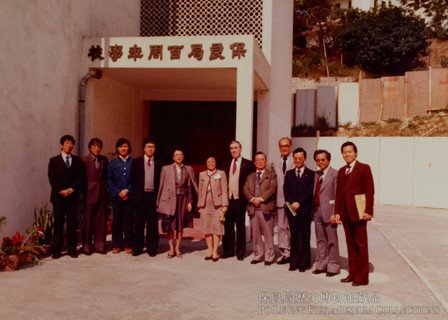
Po Leung Kuk Chairman (1981-82) Mrs Stephen Lam (fifth from left) and directors, accompanied guests on the inspection of Kuk affiliated schools in 1981. They took a group photo in front of Po Leung Kuk Centenary School.
Kuk affiliated schools students participated in the Special Olympics Hong Kong in 1984.
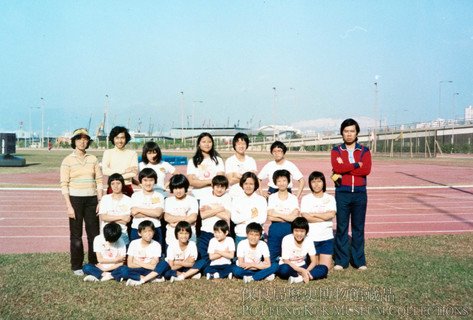
Group photo of Kuk students and teaching staffs at the Special Olympics Hong Kong in 1984.
Po Leung Kuk Chairman (1981-82) Mrs Stephen Lam visited to learn more about the classes at school.
Acting Governor Sir Philip Haddon-Cave (second from right in front) visiting Po Leung Kuk Centenary School, accompanied by Po Leung Kuk Chairman (1983-84) Mr Ng Shue Chiu (third from right in front).
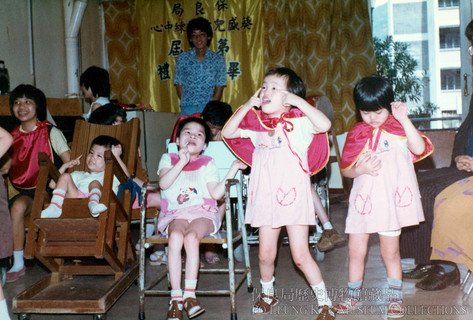
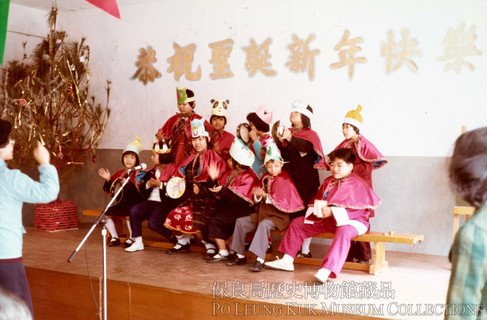
Diversified school life. This photo shows a student performance during the Christmas celebration activity at school.
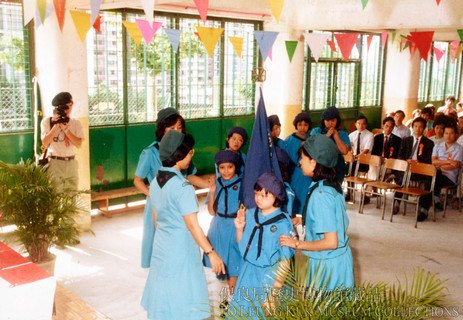
Girl Guides of Po Leung Kuk Centenary School was established in 1985, allowing more extra curriculum activities for students.


Boundless Compassion

After the 1970s, the Kuk’s rehabilitation services entered a stage of rapid growth, with service units opened across different areas of Hong Kong.


Coping with the changing social needs, the Kuk expanded the scope of its rehabilitation services, extending to the physically handicapped and the ex-mentally ill persons, etc. Aside from its original residential and day training centres, the Kuk provided a wide variety of services, such as vocational rehabilitation, community support, employment assistance, allied health, social enterprise and pre-primary services like special child care centre and school on site support, etc.


Today, the Kuk has more than 40 rehabilitation services units. Nevertheless it remains true to the original aspiration in the 1970s; Upholding the core mission of enabling an equal opportunity for the handicapped to develop and realise their potentials, the rehabilitation services is a witness to the Kuk’s long tradition of serving the community with love and dedication, and will continue to strive for a diverse and inclusive society in Hong Kong.


  Visit other exhibitions